

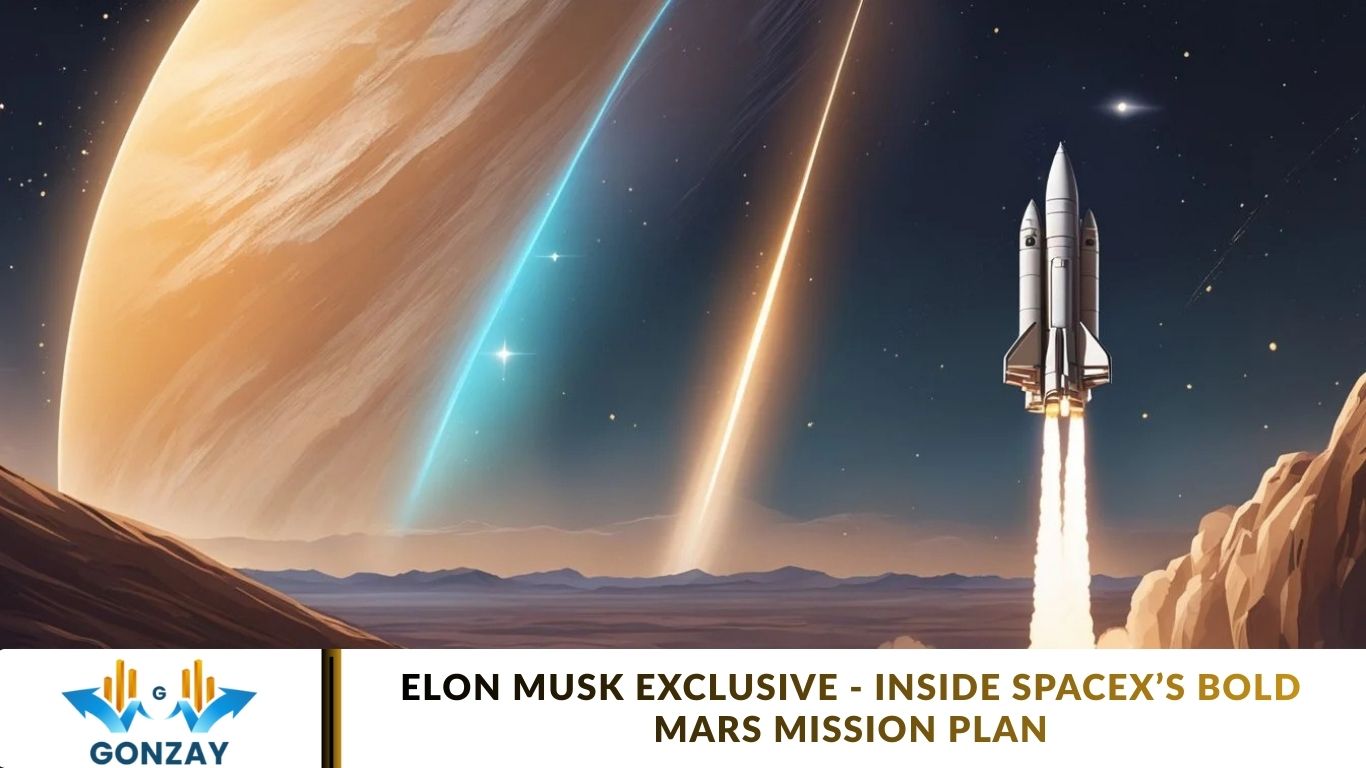
Elon Musk revealed major new insights into SpaceX’s rapidly advancing Mars mission. Musk — the visionary force behind SpaceX — outlined the mission’s latest milestones, the toughest engineering hurdles, and the long-term roadmap for turning humans into a multi-planetary species. His bold commitment to Mars colonization highlights his core belief: humanity’s future depends on establishing sustainable life beyond Earth.
Progress and Technological Breakthroughs
Musk emphasized that SpaceX has achieved major breakthroughs in rocket engineering, largely driven by the development of Starship, the most powerful spacecraft ever constructed. Built to transport heavy cargo and as many as 100 passengers across interplanetary distances, Starship represents the core of SpaceX’s long-term Mars strategy.
Musk explained, “Starship has already completed multiple successful test flights, and our current priority is enhancing its reusability and refining its safety systems.” Reusability, he noted, is the key to cutting mission costs and increasing the number of launches needed to support consistent travel to Mars.
He also shared updates on the advanced Raptor engines that power Starship. These engines run on liquid methane and liquid oxygen, both of which can be produced directly from local resources on Mars. This innovation is essential for creating a self-sustaining fuel ecosystem, allowing spacecraft to refuel on the planet and enabling practical return missions — a major step toward building a fully self-reliant Mars colony.
Challenges and Risks
Despite the remarkable progress, Musk admitted that the journey to Mars is still filled with major technical and human challenges. “Radiation exposure, reliable food and water systems, and the mental resilience of astronauts are some of the biggest hurdles we’re actively working to overcome,” he said. Developing a durable life-support system and creating advanced radiation-shielding technologies remain at the top of SpaceX’s priority list as they prepare for long-duration space travel.
Musk also highlighted the complexity of landing on Mars and building the first off-world infrastructure. SpaceX’s plan begins with a series of cargo missions that will deliver essential supplies, robotics, and construction materials. These automated systems will start assembling the first Martian habitats, along with solar power grids and resource-processing units, well before any human crew sets foot on the Red Planet.
Timeline and Future Goals
When discussing the timeline for sending humans to Mars, Musk maintained his characteristic optimism. “Our goal is to land the first humans on Mars in the early 2030s,” he said confidently. Looking further ahead, he imagines a self-sustaining Martian city that could grow to one million residents by the end of the century. For Musk, establishing a thriving colony on Mars isn’t just an achievement — it’s a critical safeguard for humanity’s long-term survival in case a catastrophic event ever threatens life on Earth.
Vision for Humanity
Musk wrapped up the interview with a powerful message: “Becoming a multi-planetary species is the next stage of human evolution. Mars is only the beginning.” His unwavering confidence in human exploration and long-term survival continues to drive SpaceX’s bold vision. If these plans come to life, SpaceX’s Mars mission could usher in a groundbreaking new era for humanity, redefining our future far beyond Earth.
SpaceX Mars mission 2026
The SpaceX Mars Mission 2026 marks one of the most ambitious milestones in modern space exploration. While 2026 may not be the year humans set foot on Mars, Elon Musk has positioned it as a pivotal launch window for major test missions, including potential uncrewed Starship flights to the Red Planet. These missions will test critical technologies, including Starship’s deep-space performance, in-orbit refueling, and Mars entry, descent, and landing systems — all essential for future human travel.
SpaceX’s 2026 plans also include sending cargo payloads, life-support prototypes, and equipment to lay the foundation for future human missions in the 2030s. The data collected from these early flights will play a huge role in shaping how SpaceX builds habitats, generates power, and produces fuel directly on Mars using in-situ resource utilization.
SpaceX Mars Mission 2026 is not the final destination — it’s the year that sets the stage for everything that comes next. If successful, it will bring humanity one step closer to Musk’s vision of becoming a multi-planetary species.
Frequently Asked Questions
What is Elon Musk’s vision behind SpaceX’s Mars mission?
Elon Musk aims to make humanity a multi-planetary species by building a long-term, self-sustaining colony on Mars that can support human life independently of Earth.
Why is Mars the primary target for colonization?
Mars has the most Earth-like environment in the solar system, with a solid surface, sunlight, water ice, and resources that can be used to produce oxygen, fuel, and building materials.
What role does Starship play in the Mars mission plan?
Starship is SpaceX’s fully reusable spacecraft designed to carry large cargo and up to 100 passengers, making it the backbone of future Mars missions.
When does Elon Musk expect humans to land on Mars?
Musk believes the first crewed Mars landing could happen in the early 2030s, following a series of test flights and cargo missions.
How many people does Musk envision living on Mars?
Elon Musk’s long-term goal is to build a self-sustaining Martian city with a population of 1 million by the end of this century.
What are the biggest challenges SpaceX faces in reaching Mars?
Major challenges include radiation exposure, long-term food and water systems, psychological strain, safe landing, and building the first infrastructure on the Red Planet.
How will SpaceX reduce the cost of Mars missions?
SpaceX is focused on full rocket reusability, allowing Starship to launch, land, and relaunch multiple times — dramatically lowering mission costs.
Conclusion
The SpaceX Mars mission is humanity’s boldest step into space. Elon Musk’s plan for a self-sustaining Martian colony leverages Starship technology, Raptor engines, and reusable rockets. Despite challenges like radiation and life support, 2026 test missions pave the way for a multi-planetary future.
